Assistive device, or cyborg suit capable of world destruction? You decide.
Meet HAL, an equally exciting and terrifying innovation.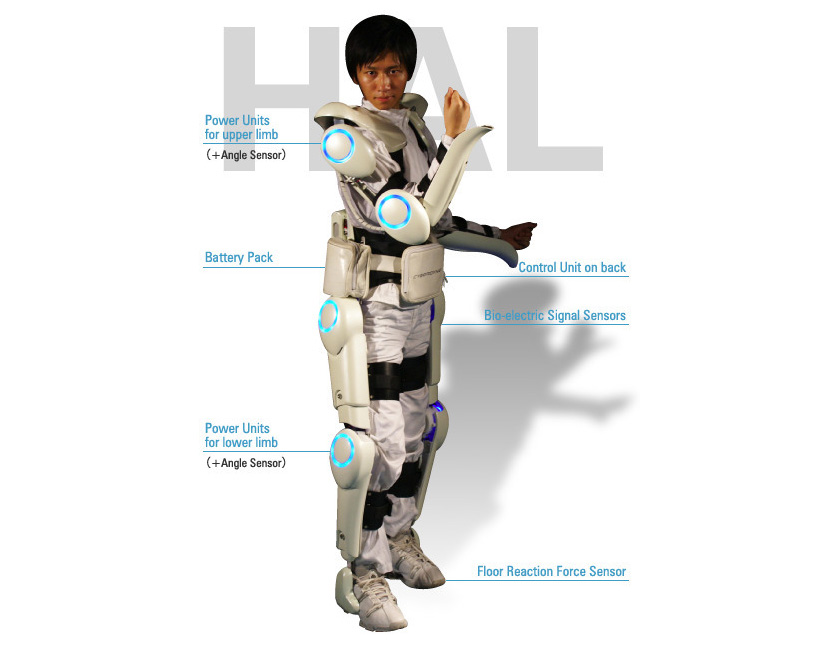 The Japanese company CYBERDYNE* recently unveiled HAL (Hybrid Assistive Limb), a robotic suit that assists the wearer with physical movement. The suit interprets brain signals by reading the bioelectric signals on the skin--signals that tell muscles to move--and responds by moving the wearer's limbs. Below is a tech writer taking the suit for a test run.[youtube=http://www.youtube.com/watch?v=f2PqnUjTUS8&feature=player_embedded]I'm amazed by ways this could allow for people with mobility disabilities to regain movement, but part of me can't help but think of comicbook-like futures where the well-intentioned inventions become the downfall of the human race.http://www.thestranger.com/binary/0969/FilmLead_TerminatorSalvation-5,70.jpgAnd doesn't CYBERDYNE just sound like the name of some super villain's super-evil engineering company? CYBERDYNE: A company once devoted to using technology to benefit mankind twisted by one man's unending thirst for power became a behemoth dedicated to crafting the ultimate human weapon. Hey, it could happen.Human fear of growing technology is long-standing. We were warned about cars, air travel, telephones, the personal computer and cell phones. But robots challenge our concepts of humanity, and not just by questioning the God/human divide. But, of course, I had to delve deeper into this commonly repeating narrative.Robots steal one thing that people--especially American people--seem to value above all else: our ability to do work. Abilism a rarely-examined core of the robot fear. When we aren't physically capable of doing work we lose our humanity. Terminator, the Matrix, heck, even feel-good family movies like Wall-E show the dangers of over-dependence on robots. Wall-E depicts the human race relegated to jumpsuit-clad lumps incapable of doing anything for themselves. When machines take over, humans become nothing but embarrassing biological messes, gluttonous and slovenly. The audience is expected to regard the devolved species with mocking pity and fear.Society views people with disabilities similarly. While science works to increase the mobility of people with disabilities, few outside the PWD community are working to change societal views that lessened mobility does not mean lessened humanity. Technological advances such as HAL may allow PWDs to walk, run and jump, but will it allow us to shed society's dehumanizing pity?