Why Is the Theatre of the Oppressed Facilitator Called a Joker?
If you've ever been in a Theatre of the Oppressed session, you've noticed that the person leading the room isn't called a facilitator. They're called a Joker.
Which raises an obvious question: why?
The first thing to know is what the Joker isn't. The Joker isn't a jester or a clown. They’re not there to entertain you. Isn't cracking jokes to keep the energy up or making the hard stuff feel lighter than it is. The name doesn't come from comedy. It comes from the wild card — the card in the deck that doesn't belong to any suit, that can't be predicted, that changes the game.
That's a much more useful frame. The Joker is
Not a facilitator, but a difficultator.
Most facilitation traditions are built around making things easier. Smoother. More comfortable. The role of the facilitator, in most contexts, is to help the group move through a process without too much friction.

Participants playing “Push to Win”
The Joker has a different job. The Joker is a difficultator — someone who makes things productively difficult. The one who asks the question nobody else will ask. Who disrupts the comfortable conclusion before the room settles into it. Who holds the space through what gets cracked open and refuses to let it close back up too quickly.
This isn't obstruction. It's not chaos for the sake of chaos. It's a deliberate, disciplined practice of keeping the work honest — of not letting the room off the hook before something real has had a chance to emerge.
The Joker doesn't take sides
Here's what makes the role genuinely hard: the Joker doesn't deliver answers. Doesn't tell the room what to think or what to do. Doesn't advocate for a particular outcome or steer the group toward a predetermined conclusion.
Instead, the Joker holds the contradiction. Sits right in the middle of the tension. Keeps the question open. Makes space for multiple truths to exist simultaneously — even when that's uncomfortable. Especially when that's uncomfortable.
The Joker's job is not to resolve the tension. It's to make sure the tension does its work.
Trickster energy as methodology
There's something of the trickster in it — the figure from folklore and mythology who disrupts the established order, shakes loose what's stuck, reveals what was hidden by asking the question that changes everything.
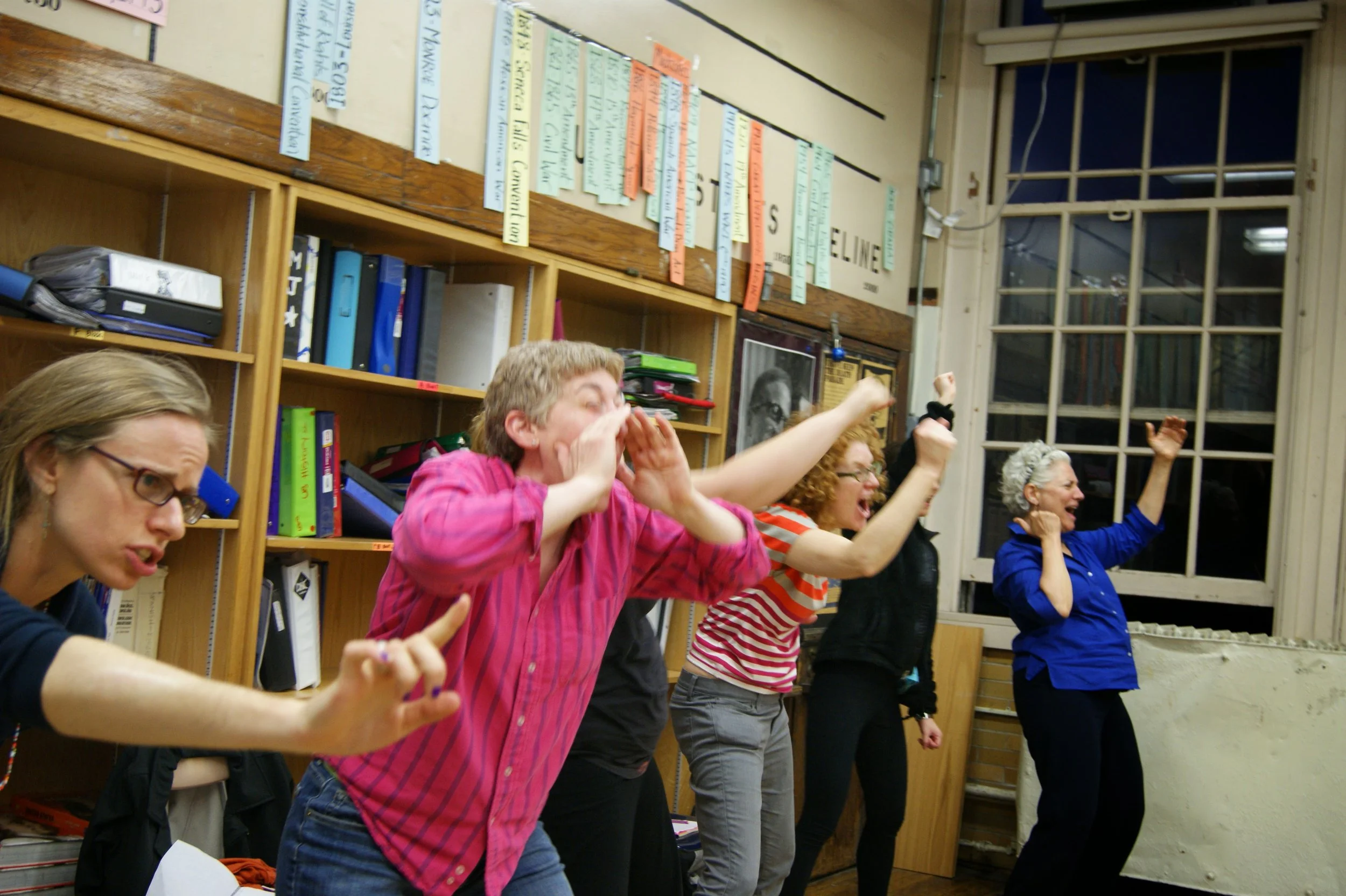
Playing the “Slow Motion Race”
In practice this looks like irreverence as a strategic tool. Play as a path to transformation. The unexpected reframe that makes the room go quiet and then suddenly alive. The moment of laughter that makes the hardest thing suddenly bearable — and then actionable.
None of that is accidental. All of it is methodology.
Why this matters
Augusto Boal, who created Theatre of the Oppressed, understood something important: the way we facilitate a process shapes what's possible in it. A facilitator who smooths things over produces a certain kind of conversation. A Joker who makes things productively difficult produces something else entirely.
That something else is what Theatre of the Oppressed is after. Not comfort. Not consensus. Not the conclusion everyone was already heading toward before they walked in the room.
Transformation. The real kind. The kind that requires the room to go somewhere it has never been.
That's the Joker's job. And after 25 years of practicing it — I still find it the most interesting work there is.
Learn more about Theatre of the Oppressed and how I use TO